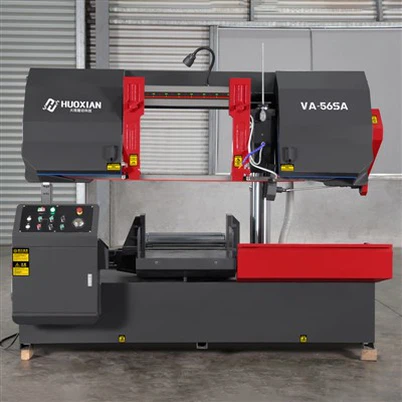
What is the cutting accuracy of a bandsaw machine?
Leave a message

What is the cutting accuracy of a bandsaw machine? Well, as a bandsaw machine supplier, I'm super excited to dig into this topic with you. Cutting accuracy is like the holy grail when it comes to bandsaw machines. It can make or break a project, whether you're working on a small DIY job or running a large - scale industrial operation.
Let's start by understanding what cutting accuracy means. In simple terms, it's how close the actual cut made by the bandsaw is to the intended cut. A highly accurate bandsaw will produce cuts that are straight, with minimal deviation from the marked line. This accuracy is measured in various ways, often in terms of the tolerance level. For example, if you're cutting a piece of metal and the design calls for a 1 - inch width, a bandsaw with high accuracy will cut it as close to 1 inch as possible, say within a tolerance of ±0.01 inches.
There are several factors that can affect the cutting accuracy of a bandsaw machine. First off, the blade quality plays a huge role. A dull, worn - out, or poorly tensioned blade can cause the saw to wander off the intended path. Imagine trying to cut a straight line with a blunt knife; it's going to be a mess. The teeth on the blade also matter. Different tooth configurations are designed for different materials and cutting requirements. If you use a blade with the wrong tooth pitch for the material you're cutting, it can lead to inaccurate cuts.
The machine's stability is another crucial factor. A wobbly or poorly constructed bandsaw is not going to give you precise cuts. The frame of the bandsaw needs to be rigid enough to withstand the forces generated during cutting. If the machine vibrates excessively, it can cause the blade to move erratically, resulting in inaccurate cuts. This is why high - quality bandsaws often have a heavy - duty frame made of sturdy materials like cast iron.
The feed rate also affects cutting accuracy. If the material is fed too quickly through the blade, the saw may not be able to keep up, leading to rough and inaccurate cuts. On the other hand, if the feed rate is too slow, it can cause the blade to overheat and dull quickly, which again impacts accuracy.
Now, let's talk about the different types of bandsaw machines and their typical cutting accuracies.
Horizontal Bandsaw Machines
These are widely used in industrial settings for cutting large chunks of metal, wood, or other materials.
- CNC Bandsaw Machine: CNC bandsaws are known for their high - level of accuracy. The computer - controlled system allows for precise control of the cutting process. They can make cuts with very tight tolerances, often down to ±0.005 inches or even less. This makes them ideal for applications where precision is critical, such as manufacturing parts for the aerospace or automotive industries.
- Full - automatic Bandsaw: Full - automatic bandsaws offer a good balance between accuracy and efficiency. They are designed to perform repetitive cutting tasks with a high degree of accuracy. These machines typically have a cutting accuracy of around ±0.01 - 0.02 inches, making them suitable for medium - to - high - volume production.
- CNC Die Steel Sawing Machine: When it comes to cutting die steel, which is a very hard and tough material, accuracy is of utmost importance. CNC die steel sawing machines are specifically designed to handle this challenge. They can achieve a cutting accuracy of around ±0.01 inches, ensuring that the die steel is cut precisely to the required dimensions.
Vertical Bandsaw Machines
Vertical bandsaws are often used for more intricate and detailed cutting tasks.
- Industrial Vertical Band Saw: Industrial vertical band saws are built for heavy - duty use. They can provide a cutting accuracy of around ±0.015 inches. These machines are great for cutting irregular shapes and curves, and their accuracy allows for a high level of detail in the finished product.
- Vertical Tilt Frame Band Saw: This type of saw offers the flexibility of tilting the frame, which is useful for making bevel cuts. The cutting accuracy of a vertical tilt frame band saw is typically around ±0.02 inches. It's a versatile machine that can handle a variety of cutting tasks, from straight cuts to bevels, with reasonable accuracy.
As a bandsaw machine supplier, I always recommend that customers take several steps to ensure the best possible cutting accuracy. First, regularly maintain the bandsaw. This includes cleaning the machine, lubricating the moving parts, and checking the blade tension. A well - maintained machine will perform better and provide more accurate cuts.
Second, choose the right blade for the job. Consider the type of material you're cutting, the thickness of the material, and the required finish. Using the wrong blade can significantly reduce cutting accuracy.


Finally, train your operators properly. A skilled operator can make a big difference in the accuracy of the cuts. They know how to adjust the feed rate, control the speed, and ensure that the material is properly positioned before cutting.
If you're in the market for a bandsaw machine and are concerned about cutting accuracy, don't hesitate to reach out. I've got a wide range of bandsaw machines, including all the types I've mentioned above, that can meet your specific needs. Whether you're a small - scale workshop or a large - scale industrial facility, I'm here to help you find the perfect bandsaw with the right cutting accuracy for your projects. Drop me a line to start the conversation about how we can work together to get you the best bandsaw for your requirements.
References
- "Metal Cutting Handbook" for information on cutting processes and accuracy factors.
- "Woodworking Machinery Guide" for details on wood - cutting bandsaw accuracy and performance.