Can a Bi-metal bandsaw blade be used for cutting hard materials?
Leave a message

Hey there! As a supplier of Bi-metal bandsaw blades, I often get asked a bunch of questions about our products. One question that pops up quite a bit is, "Can a Bi-metal bandsaw blade be used for cutting hard materials?" Well, let's dive right into it and find out.
First off, let's talk about what a Bi-metal bandsaw blade is. It's a type of bandsaw blade that's designed to be flexible and easy to handle. These blades are great for a variety of applications, from DIY projects at home to professional use in workshops. They're usually made from high - quality materials that can withstand the rigors of cutting.
Now, when it comes to hard materials, we're talking about stuff like stainless steel, hardened steel, and some types of alloys. These materials are tough and require a blade that can handle the pressure and abrasion.
The answer to whether a Bi-metal bandsaw blade can cut hard materials isn't a simple yes or no. It depends on a few factors.
Blade Material
One of the most essential elements is the fabric of the blade. There are special kinds of substances used in making bandsaw blades, and every has its personal properties.
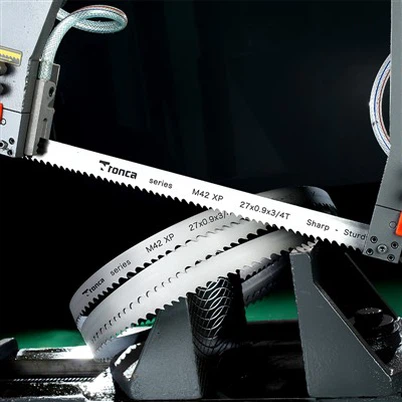
M42 Bandsaw Blade: The M42 Bandsaw Blade is a famous desire for reducing difficult materials. M42 is a excessive - pace metal that consists of a tremendous quantity of cobalt. This cobalt offers the blade extremely good warmth resistance and hardness. When slicing tough materials, the blade is going to generate a lot of heat, and the M42 blade can take care of it besides dropping its aspect quickly. It can reduce via stainless metal and different tough alloys with relative ease.
Bimetal Bandsaw Blade: The Bi-metal Bandsaw Blade is any other terrific option. As the title suggests, it is made from two distinctive metals. The enamel are commonly made from excessive - pace steel, which offers the slicing power, whilst the backing is made from a bendy spring steel. This mixture approves the blade to be each robust and flexible. Bi-metal blades are recognised for their durability and can reduce via a large vary of tough materials.
Tooth Design
The enamel graph of the bandsaw blade additionally performs a fundamental position in slicing challenging materials.
Tooth Pitch: The teeth pitch refers to the variety of tooth per inch on the blade. For slicing tough materials, a finer teeth pitch is typically better. A blade with greater tooth per inch can make a smoother reduce and decrease the quantity of stress on every tooth. This is vital due to the fact difficult substances can be very abrasive, and a blade with a coarse teeth pitch might also put on out shortly or break.
Tooth Shape: Different teeth shapes are designed for exceptional slicing applications. For tough materials, a teeth form that can face up to the stress and face up to chipping is ideal. Some blades have a one of a kind teeth geometry that helps to destroy up the chips and stop them from clogging the blade.
Cutting Speed And Feed Rate
The slicing pace and feed charge are two different essential elements to think about when the usage of a Bi-metal bandsaw blade to reduce challenging materials.
Cutting Speed: The reducing pace is the velocity at which the blade strikes via the material. For difficult materials, a slower slicing pace is generally recommended. This lets in the blade to reduce thru the fabric barring overheating and dropping its edge. If the reducing velocity is too fast, the blade may additionally put on out shortly or even break.
Feed Rate: The feed charge is the velocity at which the fabric is fed into the blade. A slower feed price is additionally higher when reducing difficult materials. This offers the blade adequate time to reduce via the cloth and reduces the chance of the blade getting caught or breaking.
Advantages Of Using A Bi-metal Bandsaw Blade For Hard Materials
There are various benefits to the usage of a Bi-metal bandsaw blade for reducing difficult materials.
Flexibility: Bi-metal bandsaw blades are flexible, which makes them handy to manage and install. They can be used in a range of bandsaw machines, each transportable and stationary.
Versatility: These blades can be used for a broad vary of reducing applications, no longer simply for tough materials. They can additionally reduce thru softer substances like wooden and plastic.
Cost - effective: Compared to some different sorts of reducing tools, Bi-metal bandsaw blades are enormously fee - effective. They provide a suitable stability between overall performance and price.
Limitations
Of course, there are additionally some barriers to the use of a Bi-metal bandsaw blade for slicing challenging materials.
Thickness: Bi-metal bandsaw blades can also now not be appropriate for slicing very thick challenging materials. The blade may also no longer have ample power to reduce via thick sections of material, and it may additionally smash or put on out quickly.
Complex Shapes: Cutting complicated shapes in difficult substances can be difficult with a Bi-metal bandsaw blade. The blade might also now not be capable to make sharp turns or cuts with excessive precision.
Tips For Using A Bi-metal Bandsaw Blade On Hard Materials
If you are planning to use a Bi-metal bandsaw blade to reduce difficult materials, right here are some suggestions to assist you get the first-class results.
Choose the Right Blade: Make certain you pick a blade it truly is specially designed for slicing tough materials. Consider the blade material, teeth design, and size.
Use Coolant: Using a coolant can assist to decrease the warmness generated at some stage in slicing and prolong the existence of the blade. Coolant additionally helps to flush away the chips and stop them from clogging the blade.
Maintain the Blade: Regularly look at the blade for symptoms of put on and damage. Sharpen or replace the blade when necessary.
Follow the Manufacturer's Instructions: Always comply with the manufacturer's directions for the usage of the bandsaw and the blade. This will assist to make certain secure and high-quality cutting.
In conclusion, a Bi-metal bandsaw blade can be used for cutting hard materials, but it's important to choose the right blade and use it correctly. With the right blade and proper techniques, you can achieve great results when cutting hard materials like stainless steel and other alloys.
If you're interested in purchasing Bi-metal bandsaw blades for cutting hard materials, or if you have any questions about our products, feel free to reach out. We're here to help you find the best solution for your cutting needs.